Bringing a New Water Source Online: Supporting a Swanzey Community Water System
Bringing a New Water Source Online: Supporting a Swanzey Community Water System
Reliable access to clean, dependable drinking water is something most people rarely have to think about. But for small community water systems, maintaining a reliable water supply can require ongoing planning, testing, permitting, and investment.
In the spring of 2026, Edgewater Strategies worked with a small community water system in Swanzey, New Hampshire, to permit a new groundwater source and help address declining capacity in several of the community’s existing wells.
The project demonstrates the important role that water-resource professionals play in helping communities maintain reliable water supplies while meeting New Hampshire's regulatory requirements.
A Community with a Long History
The Swanzey community has been providing water to its residents for more than 40 years. Over that time, multiple wells have been installed to supply water to the homes within the community.
Like many groundwater systems, however, individual wells can change over time.
Several of the community's existing wells have experienced a loss of capacity, making it increasingly difficult for the system to consistently meet the water demands of its residents.
Rather than waiting for the situation to become a larger problem, the community began working toward developing an additional water source.
That's where Edgewater came in.
Permitting a New Groundwater Source
Edgewater worked with the community to permit a new well as a water supply source.
Before a new groundwater source can become part of a public water system, there are a number of technical and regulatory requirements that need to be addressed. These requirements help demonstrate that the source can provide an adequate quantity of water and that the water source is suitable for the intended use.
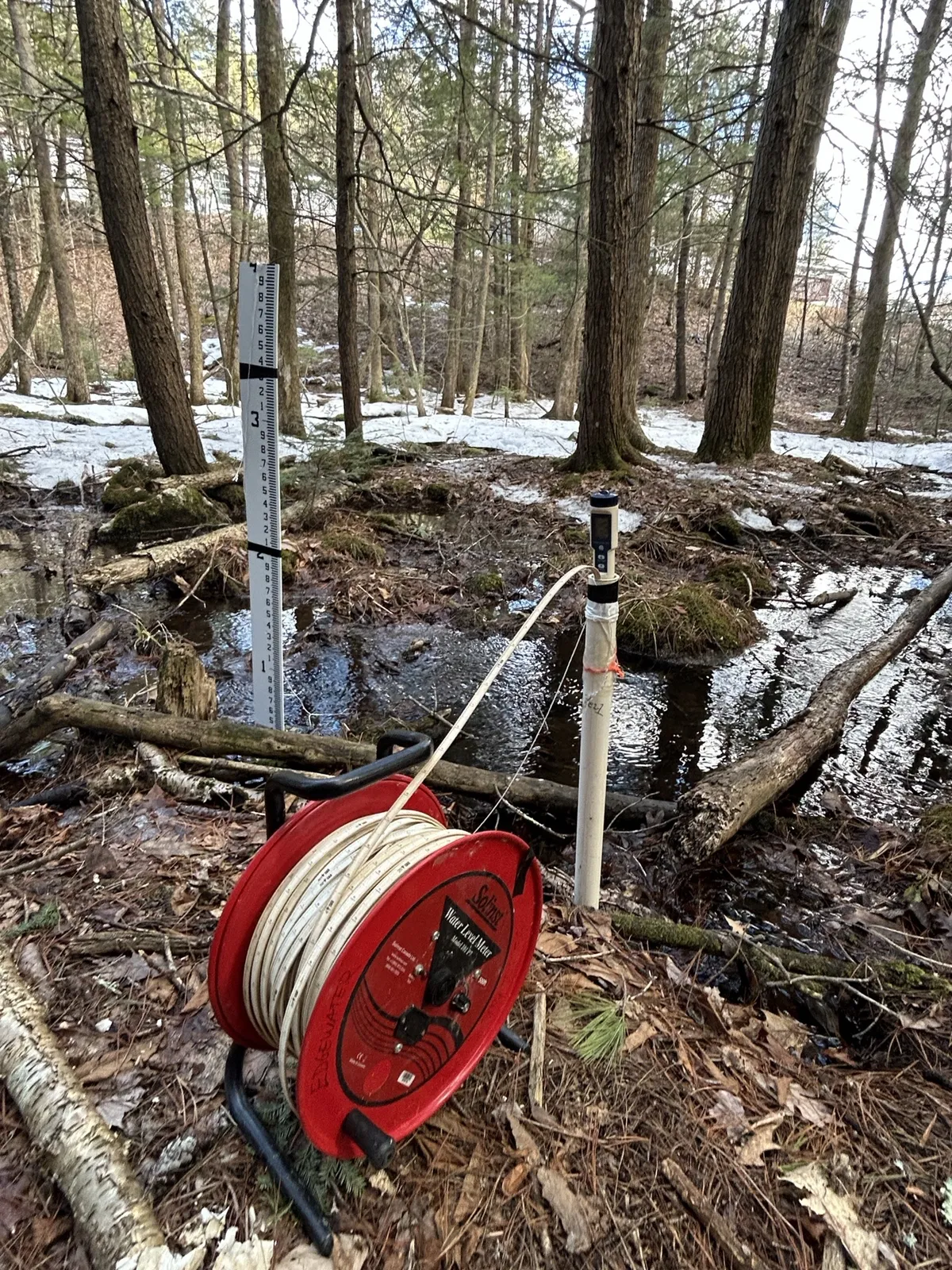
As part of the process, Edgewater conducted and supported the necessary fieldwork associated with evaluating the new well.
One important component was a pumping test.
What Is a Pumping Test?
A pumping test provides valuable information about how a well and the surrounding groundwater system respond when water is pumped from the aquifer.
During the test, water is pumped from the well at a controlled rate while measurements are collected. The pumping well is metered so that the amount of water being produced can be documented, while water-level and water-quality information can also be evaluated.
The information gathered during a pumping test helps water-resource professionals understand the performance and sustainability of a groundwater source.
For this Swanzey project, the pumping test setup included equipment for well pumping, flow metering, and water-quality sampling.
Looking Beyond the Well: Microscopic Particulate Analysis
One of the samples collected during the testing process is a Microscopic Particulate Analysis (MPA).
While the name may sound highly technical, the purpose is relatively straightforward: MPA can provide information about whether groundwater may be influenced by nearby surface water sources.
Groundwater and surface water don't always exist as completely separate systems. Depending on local geology and site conditions, groundwater can be hydraulically connected to nearby rivers, streams, ponds, wetlands, or other surface-water features.
An MPA examines microscopic particles collected from the groundwater to help evaluate whether the groundwater source may be influenced by surface water.
This type of analysis can be particularly useful when evaluating a new groundwater source because understanding the relationship between groundwater and nearby surface-water features is an important part of assessing the source.
Working Within New Hampshire's Drinking Water Requirements
The work on this project is being completed in accordance with the New Hampshire Department of Environmental Services (NHDES) Env-DW 305 rules, which establish requirements related to drinking water supply sources.
For a small community water system, navigating the regulatory process can be just as important as the technical fieldwork itself.
Source development involves bringing together field testing, water-quality information, engineering considerations, permitting requirements, and long-term water supply planning.
Edgewater's role is to help bring those pieces together so that communities can make informed decisions about their water infrastructure.
Connecting the New Well to the System
Permitting the new source is only one part of the project.
Edgewater has also helped the community secure federal funding to connect the new well to the water system's existing pump house.
That connection will allow the newly permitted source to become part of the community's broader water supply infrastructure.
The construction portion of the project is currently underway.
Once complete, the new source will provide the community with an additional component of its water supply system and help address the challenges associated with declining production from some of its older wells.
Planning Today for a More Reliable Water Supply Tomorrow
For small community water systems, water supply planning is about more than simply finding water. It requires understanding how a source performs, evaluating water quality, navigating regulatory requirements, securing funding, and developing infrastructure that can serve residents for years to come.
The Swanzey project is a great example of that process in action.
From the initial evaluation and pumping test to MPA sampling, permitting, funding, and infrastructure improvements, each step contributes to the larger goal: helping a community maintain a dependable source of drinking water.
As communities across New Hampshire continue to manage aging infrastructure and changing water-supply needs, thoughtful planning and careful evaluation of groundwater resources will remain an important part of maintaining resilient community water systems.
Edgewater Strategies is proud to support communities through the technical, regulatory, and planning challenges involved in developing and protecting their water resources.
