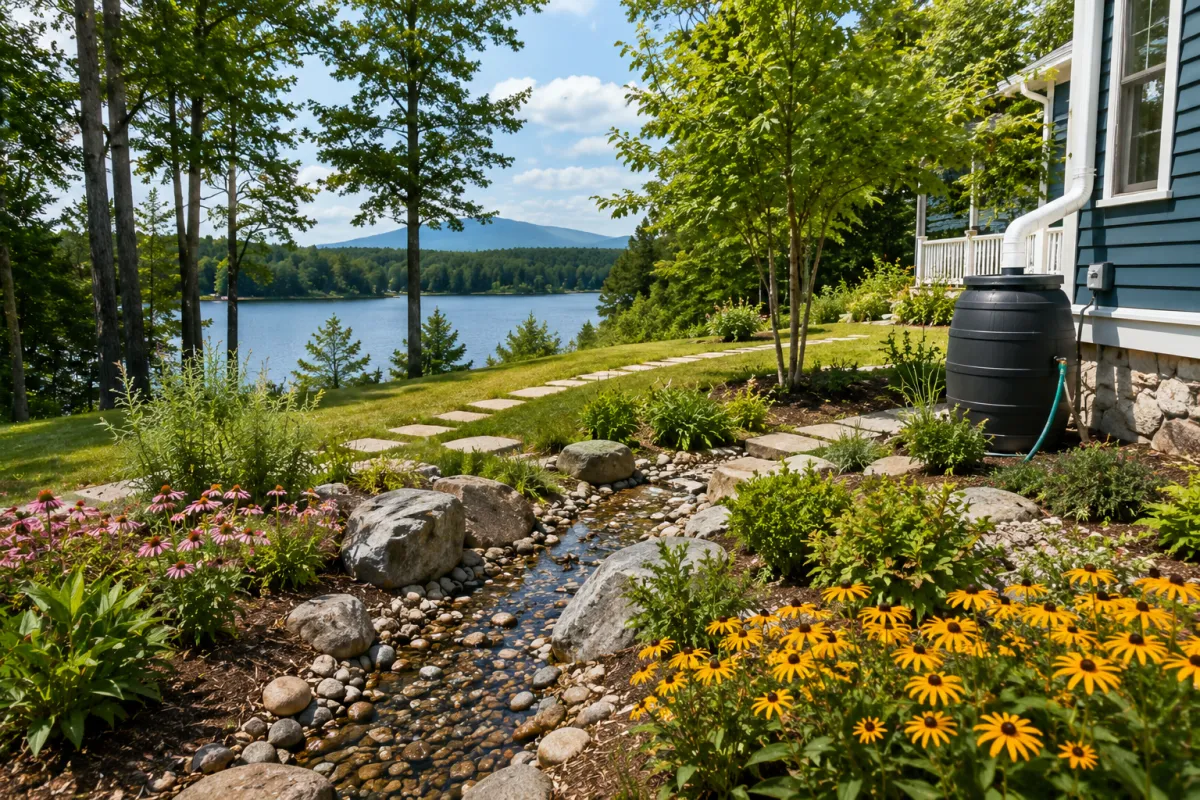
Simple Ways Homeowners Can Reduce Stormwater Runoff
Simple Ways Homeowners Can Reduce Stormwater Runoff
When rain falls, where does the water go?
For many properties, rainwater flows across roofs, driveways, lawns, and sidewalks, picking up sediment, fertilizers, chemicals, and other pollutants along the way. This process, known as stormwater runoff, can negatively impact lakes, rivers, wetlands, and groundwater supplies.
The good news is that homeowners can make simple, effective changes to help reduce runoff and protect New Hampshire's valuable water resources.
Why Stormwater Runoff Matters
Stormwater runoff doesn't just disappear. As it moves across the landscape, it can:
Carry pollutants into lakes, streams, and wetlands
Increase shoreline erosion and sedimentation
Reduce water quality and clarity
Contribute to algae growth and excess nutrients in waterways
Disrupt wildlife habitats and aquatic ecosystems
Increase localized flooding and drainage issues
Every property plays a role in protecting water quality, especially in waterfront and environmentally sensitive areas.
Plant Native Vegetation
Native plants are one of the most effective tools for managing stormwater naturally.
Trees, shrubs, grasses, and native flowers have deep root systems that absorb rainwater and help hold soil in place. They also slow runoff, filter pollutants, and reduce erosion.
Consider replacing portions of traditional turf grass with native plantings that thrive in New Hampshire's climate and require less maintenance over time.
Create a Natural Shoreline Buffer
If you live near a lake, pond, river, or wetland, maintaining a vegetated buffer along the shoreline can make a significant difference.
Natural buffers:
Filter sediment and pollutants before they reach the water
Stabilize shorelines and reduce erosion
Provide habitat for birds, pollinators, and wildlife
Improve water quality and ecosystem health
Even a modest buffer of native grasses, shrubs, and trees can have long-lasting environmental benefits.
Reduce Impervious Surfaces
Hard surfaces such as driveways, patios, and walkways prevent water from soaking into the ground.
When possible, consider:
Installing permeable pavers
Adding gravel pathways
Reducing unnecessary paved areas
Directing runoff toward landscaped areas
Allowing water to infiltrate the ground helps recharge groundwater supplies and reduces the amount of runoff leaving your property.
Use Rain Barrels
Rain barrels are an easy way to capture and reuse rainwater from your roof.
Collected water can be used to:
Water gardens and landscaping
Reduce demand on municipal or private water supplies
Minimize runoff during heavy rain events
It's a simple solution that benefits both your property and the environment.
Limit Fertilizer and Chemical Use
Excess fertilizers and lawn chemicals can easily be carried away by stormwater.
To help protect water quality:
Apply fertilizers sparingly and only when necessary
Avoid applications before rain is expected
Choose environmentally friendly products when possible
Sweep fertilizer from driveways and sidewalks back onto lawns
Small changes in lawn care practices can significantly reduce pollutants entering nearby waterways.
Every Property Makes a Difference
Protecting New Hampshire's lakes, rivers, and groundwater resources begins at home. Thoughtful landscaping and simple stormwater management practices can reduce runoff, improve water quality, and create healthier ecosystems for future generations.
By planting native vegetation, preserving natural shoreline buffers, and finding ways to slow and absorb rainwater, homeowners can play an important role in protecting the natural resources that make New Hampshire such a special place to live.
At Edgewater Strategies, we believe that healthy waterways start with informed stewardship. Small actions today can create lasting benefits for our communities and the environment.
