Understanding New Hampshire's Drought Conditions and What They Mean for Private Well Owners
Understanding New Hampshire's Drought Conditions and What They Mean for Private Well Owners
As summer approaches, many New Hampshire residents begin paying closer attention to their water supply—especially those who rely on private wells. While a lush lawn and sunny weather may be welcome signs of the season, dry conditions can have a significant impact on groundwater resources.
Understanding how drought affects groundwater and private wells can help homeowners recognize potential issues early and take steps to protect their water supply.
How Drought Is Monitored in New Hampshire
Drought conditions are monitored through a combination of rainfall data, streamflow measurements, groundwater levels, reservoir storage, and soil moisture conditions. Agencies such as the U.S. Drought Monitor, National Integrated Drought Information System (NIDIS), and New Hampshire Department of Environmental Services regularly track and report drought status throughout the state.
It's important to understand that drought is more than just a lack of rain. Different types of drought affect water resources in different ways:
Meteorological Drought – Below-average precipitation over an extended period.
Agricultural Drought – Reduced soil moisture affecting vegetation and crops.
Hydrological Drought – Reduced streamflows, lake levels, and surface water supplies.
Groundwater Drought – Declining groundwater levels that may impact private wells and water availability.
Because groundwater responds more slowly than surface water, well owners may continue experiencing impacts even after rainfall returns.
Groundwater vs. Surface Water: What's the Difference?
Many people notice drought first by observing lower lake levels, reduced streamflows, or dry ponds. These are examples of impacts to surface water.
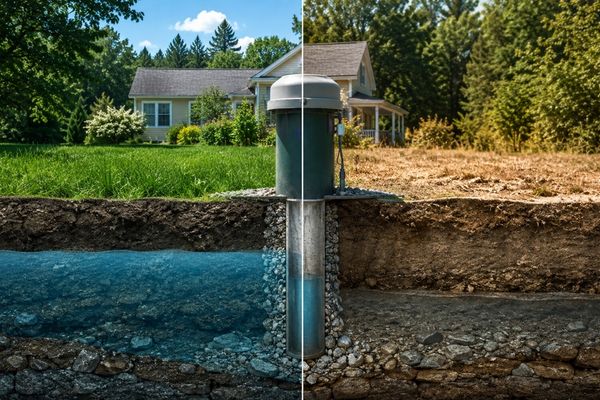
Groundwater exists beneath the ground within soil, sand, gravel, and bedrock fractures. This underground water supply feeds private wells and helps sustain lakes, streams, and wetlands during dry periods.
When drought conditions persist:
Surface water levels often decline first.
Groundwater recharge decreases.
Water tables may drop.
Wells may produce less water or recover more slowly.
Water quality characteristics can sometimes change.
Because groundwater systems recharge gradually, recovery often takes longer than many homeowners expect.
What Private Well Owners Should Watch For
If your property relies on a private well, there are several signs that may indicate drought-related impacts:
Reduced Water Pressure
Lower-than-normal water pressure can be one of the earliest signs that groundwater levels are declining.
Air in Plumbing Lines
Sputtering faucets or bursts of air may indicate the well pump is drawing water from a lower level than usual.
Changes in Water Quantity
Homeowners may notice slower well recovery after heavy water use, such as irrigation, laundry, or filling pools.
Changes in Water Quality
In some cases, drought conditions can affect water chemistry, causing noticeable changes in taste, odor, or appearance.
Increased Demand During Summer
Even if groundwater levels remain stable, higher seasonal water use from irrigation, gardening, pressure washing, and outdoor recreation can place additional stress on private wells.
Steps Homeowners Can Take to Protect Their Water Supply
While homeowners cannot control rainfall, they can take proactive measures to reduce stress on their wells during dry periods.
Use Water Efficiently
Consider reducing unnecessary outdoor water use by:
Watering lawns only when necessary
Installing efficient irrigation systems
Repairing leaks promptly
Running full loads of laundry and dishes
Spread Out High-Water-Use Activities
Avoid performing multiple water-intensive tasks at the same time. Spacing out activities can help prevent excessive demand on the well.
Monitor Well Performance
Pay attention to changes in water pressure, flow rate, or water quality. Early identification of issues can help prevent more significant problems later.
Test Your Water Regularly
Private well owners are responsible for monitoring their own water quality. Routine testing can help identify concerns before they become health risks.
Stay Informed
Monitor drought conditions through local and national resources, including drought.gov and updates from the New Hampshire Department of Environmental Services.
Planning for Long-Term Water Resilience
As weather patterns become increasingly variable, understanding your property's groundwater resources is more important than ever. Whether you're experiencing changes in well performance, planning future development, evaluating water availability, or simply looking to better understand your water supply, professional hydrogeologic evaluation can provide valuable insight.
At Edgewater Strategies, we help homeowners, municipalities, and businesses understand and protect groundwater resources through hydrogeologic investigations, water supply assessments, permitting support, and water resource planning.
Questions About Your Well or Water Supply?
Our team can help evaluate groundwater conditions and provide guidance on protecting your water resources for years to come.
Contact Edgewater Strategies to learn more about groundwater, drought impacts, and sustainable water management in New Hampshire.
