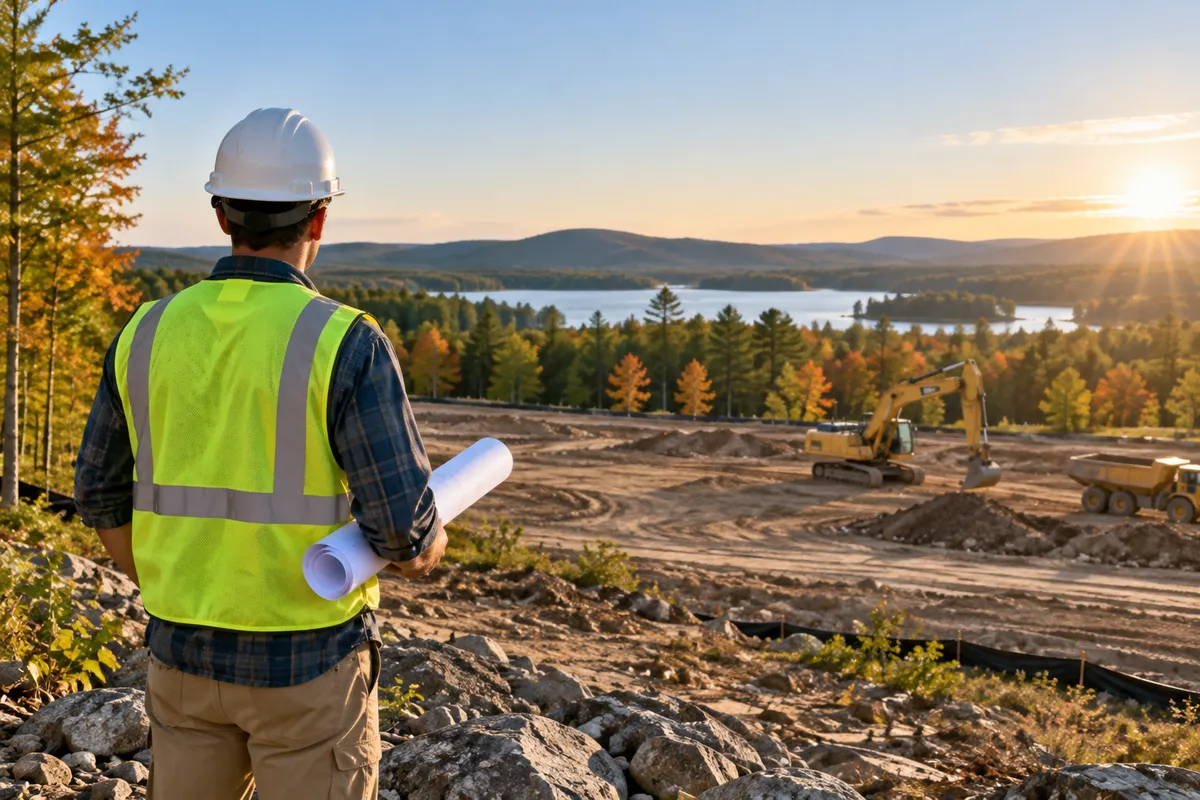
Planning a 2027 Development Project? Why Environmental Planning Should Start Now
If you’re thinking about starting a development project in New Hampshire in 2027, now is the time to start looking at the land—not next spring.
It can be tempting to wait until winter passes and the construction season gets closer before beginning environmental planning. But site investigations, wetland delineations, groundwater evaluations, permitting, and other environmental considerations can all influence the design, cost, and timeline of a project.
Starting early gives you time to understand the property before plans are finalized and helps identify potential challenges while there is still time to address them.
The best development plans start with understanding the site.
Start With the Land, Not the Building
Before designing a project, it’s important to understand the conditions already present on the property.
That means asking questions such as:
Where are the wetlands?
How does water move across the property?
Where is groundwater located?
Are there streams, ponds, or other surface waters nearby?
Are there environmental resources that could affect the project?
How much water will the proposed development require?
What permits or approvals may be necessary?
Are there site constraints that could influence where or how development occurs?
These questions can have a direct impact on the feasibility and design of a project.
New Hampshire's wetland rules, for example, require project proponents to evaluate wetlands and certain priority resource areas when determining the appropriate project classification and approvals.
Finding those considerations early is much easier than discovering them after a site plan has already been designed.
1. Site Investigations
A thorough understanding of existing site conditions is an important first step.
Site investigations can help identify features that may influence development, including drainage patterns, surface water, wetlands, soils, groundwater conditions, existing infrastructure, and other environmental constraints.
The earlier these conditions are understood, the more information the project team has when evaluating potential layouts.
Instead of asking, “How do we make this plan work on the property?” later in the process, early investigation can help answer, “What type of plan makes the most sense for this property?”
2. Wetland Delineations
Wetlands aren't always obvious.
Some may be easy to identify, while others can be less apparent depending on the season, vegetation, soils, and hydrology of the site.
A professional wetland delineation can identify the boundaries and characteristics of wetlands and other jurisdictional areas that may affect a proposed project.
New Hampshire regulations generally require wetlands to be delineated and classified by a certified wetland scientist when applicable, with certain exemptions depending on the project.
This information can be critical when determining where buildings, roads, utilities, parking areas, and other improvements can be located.
It can also help the project team understand potential permitting requirements before finalizing a design.
3. Groundwater Evaluation
What happens below the surface can be just as important as what you can see above it.
Groundwater conditions can influence water availability, wells, drainage, development feasibility, and the relationship between a property and nearby surface waters.
For projects that require a new or expanded water supply, understanding groundwater resources early can help determine whether the proposed use is feasible and what additional evaluation or permitting may be necessary.
Groundwater investigations and monitoring can also provide valuable information for long-term planning.
At Edgewater Strategies, groundwater resources and new development planning are core areas of our work. We help clients better understand the water beneath their property so that groundwater considerations can be incorporated into the planning process—not addressed as an afterthought.
4. Water Availability
A development project needs more than a suitable building site. It also needs an appropriate water supply.
Depending on the project, questions about water availability may include:
Is there an adequate groundwater source?
Will a new well be needed?
Could the proposed use affect existing water resources?
Is a drinking water withdrawal permit required?
How much water will the development need?
What happens as demand changes over time?
Evaluating these questions early can help identify potential limitations before a project gets too far into design.
For larger developments and communities, water-resource planning can also help support long-term growth while protecting existing water supplies.
5. Permitting Takes Planning
Environmental permitting is often one of the areas where waiting until spring can create unnecessary delays.
Depending on the location and scope of a project, approvals may involve wetlands, waterfront resources, alteration of terrain, water withdrawals, local planning and zoning, or other environmental considerations.
New Hampshire's permitting requirements can also involve site-specific information, maps, resource identification, wetland delineations, impact assessments, and measures to avoid or minimize environmental impacts.
The exact requirements depend on the project, but one thing is consistent:
You need to know what applies before you can plan around it.
Starting the process early provides more time to gather information, coordinate with the project team, address questions, and make informed decisions.
6. Identify Environmental Constraints Before Designing Around Them
Every property has its own opportunities and limitations.
A wetland may influence where a building can be placed. Groundwater conditions may influence water-supply planning. Drainage patterns may affect site design. A nearby stream or lake may introduce additional environmental considerations.
These aren't necessarily reasons a project can't move forward.
They're pieces of information that can help determine how a project should move forward.
The goal of early environmental planning isn't to put unnecessary obstacles in the way of development.
It's to identify potential constraints early enough that they can be incorporated into the design.
7. Give Your Project More Time
One of the biggest advantages of starting environmental planning early is simply having more time.
Imagine waiting until spring to begin investigating the property, only to discover that additional wetland work is needed. Or that groundwater conditions require further evaluation. Or that the proposed project will require a permit you hadn't anticipated.
Now the project timeline has changed.
Starting in the fall or winter gives your team a chance to identify those issues before construction season is right around the corner.
It can also give designers, engineers, developers, municipalities, and environmental professionals more time to work together.
Think of Environmental Planning as Part of the Design Process
Environmental planning shouldn't happen after the project has already been designed.
It should help inform the design from the beginning.
A site with wetlands may require a different layout.
A site with limited water availability may require a different approach to water use.
A site with challenging drainage may need a different stormwater strategy.
Understanding those conditions early can help the entire project team make better decisions.
Start Understanding the Site Before You Start Designing the Project
If you're planning a 2027 development project, the fall is an excellent time to start asking questions.
You don't need to have every detail figured out yet. But understanding the environmental conditions of the property can give you valuable information as the project moves forward.
At Edgewater Strategies, we help developers, property owners, communities, and project teams navigate the water and environmental considerations that can affect development in New Hampshire.
Our services include groundwater resources and monitoring, new development planning, water withdrawal permitting, public water systems, and waterfront and wetland permitting.
Whether you're considering a new development, expansion, waterfront improvement, or another property project, bringing environmental expertise into the conversation early can help you plan with greater confidence.
Because the best time to discover what your property can—and can't—support is before the plans are finalized.
Planning for 2027?
Start by understanding the site.
Then design around what you find.
Contact Edgewater Strategies to discuss the environmental and water-resource considerations that may affect your project.
