
Supporting Responsible Development: The Liberty Commons Well Siting & Hydrostudy in Kingston, NH
Supporting Responsible Development: The Liberty Commons Well Siting & Hydrostudy in Kingston, NH
As communities grow, responsible development becomes more important than ever. New housing opportunities must be balanced with thoughtful planning to ensure that local water resources remain protected for both current and future residents.
At Edgewater Strategies, our team works closely with developers, municipalities, and communities to ensure that development projects move forward in a way that protects groundwater availability and quality. One recent example of this work is the Liberty Commons development in Kingston, New Hampshire, where we are supporting the well siting and hydrogeologic study for a new community water supply.
Providing Water for a Growing Community
The Liberty Commons project is designed to provide additional housing opportunities for the Kingston community. A key part of the project is ensuring that the development has a reliable and sustainable water supply.
To accomplish this, the project team is working through the permitting process for up to four new bedrock wells that could serve the community water system.
Before full permitting can occur, several steps are required to understand how much water the wells can produce and how they might interact with the surrounding groundwater system.
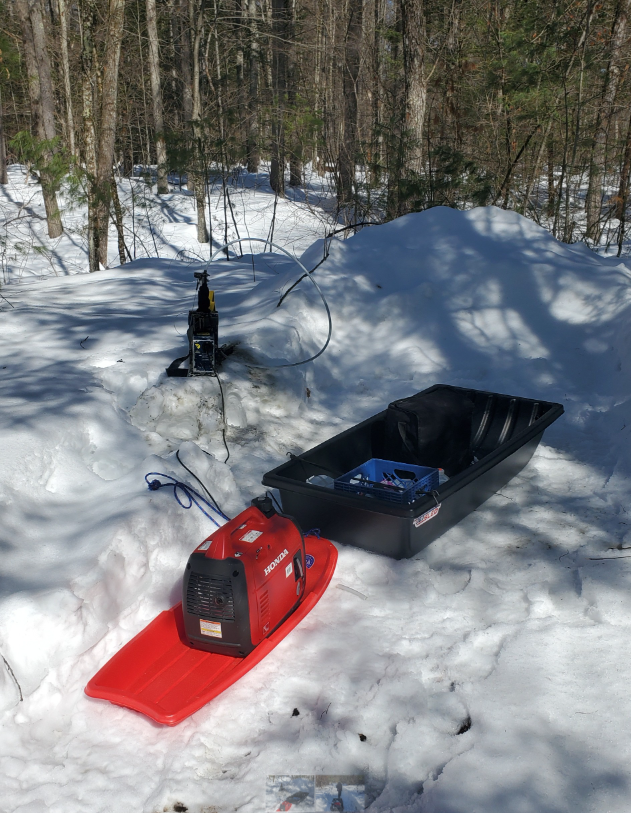
Currently, short-duration yield tests are being performed to evaluate the potential productivity of each well. These tests help determine which wells may be suitable candidates before moving forward with a more extensive pumping test, which is required as part of the final permitting process.
Why Hydrogeologic Studies Matter
Kingston requires a hydrogeologic study (hydrostudy) for developments like Liberty Commons. This requirement helps ensure that new septic systems associated with development will not negatively affect groundwater quality for neighboring properties.
These studies provide important answers to questions such as:
How groundwater moves beneath the site
Whether wastewater from septic systems could impact nearby wells
Whether the surrounding geology can safely support the proposed development
By completing this work early in the project, communities can feel confident that new development is being planned responsibly.
Building a Detailed Groundwater Model
To support the hydrostudy, the project team constructed 12 monitoring wells within the shallow, surficial materials across the site.
These monitoring wells serve several important purposes:
1. Understanding groundwater flow
The monitoring wells help create a conceptual model of the groundwater system, showing how water moves beneath the property and how it may interact with nearby areas.
2. Collecting water quality data
Samples collected from these wells provide important information about existing groundwater quality conditions.
3. Evaluating soil and aquifer properties
During well construction, soil samples were collected and analyzed. In addition, slug testing was performed to evaluate how easily water can move through the surficial materials. These tests help determine the capacity of the soils to transmit groundwater.
Together, these data points allow scientists and regulators to better understand how the site functions from a groundwater perspective.
Edgewater’s Role in the Project
Edgewater Strategies has played a key role throughout the process, providing technical expertise and oversight at multiple stages of the study.
Our team has:
Supervised and consulted on the construction of the monitoring wells
Developed and sampled the monitoring wells for water quality analysis
Collected and interpreted soil and groundwater data
Prepared the preliminary well siting report
Provided oversight for the well pumping test process
Begun development of the conceptual groundwater model
Started compiling the final report required for well permitting
This work ensures that both regulators and the community have the scientific information needed to make informed decisions about the project.
Protecting Water Resources While Supporting Housing
Projects like Liberty Commons highlight how careful planning and scientific analysis can support both community growth and environmental protection.
Hydrogeologic studies, groundwater monitoring, and responsible well siting help ensure that new housing developments do not negatively impact neighboring wells or groundwater quality.
By combining technical expertise with responsible development practices, communities like Kingston can continue to grow while protecting one of their most important resources: clean and reliable groundwater.
